
New Pouches Lock Quick Reset
New pouches may need to do a quick reset by hitting the ball on a hard surface. Remember to insert the stud straight down and cut the white label inside.
One Number Per Student, Scale to Any Size, and Gain Many Benefits
Damage has a name
One pouch, one student, all year.
Nothing to store
Pouches go home with students and come back. No bins, no lockers, no morning pickup.
No lines at the doors
Lock in class. The crowd splits across multiple unlock stations.
Less work for staff
Teachers verify; students unlock themselves. Admin steps in only for damage.
Scales to any size
Each teacher tracks one roster, so 300 students works like 3,000.
Emergency access built in
Cut the dedicated safety point and the phone is out in seconds. Repaired free.
504, IEP, and medical plans
Same pouch, with a lock tier the student can open.
The daily loop
Two teachers verify. Students unlock themselves at the nearest station.
Eight steps
Before switch day
Number every pouch with a Sharpie. Front and inside the flap. The number stays for life.
Give each first-period teacher a stack. One per student, plus a few spares.
Teachers print their rosters. First period and sixth period, each their own.
Switch day
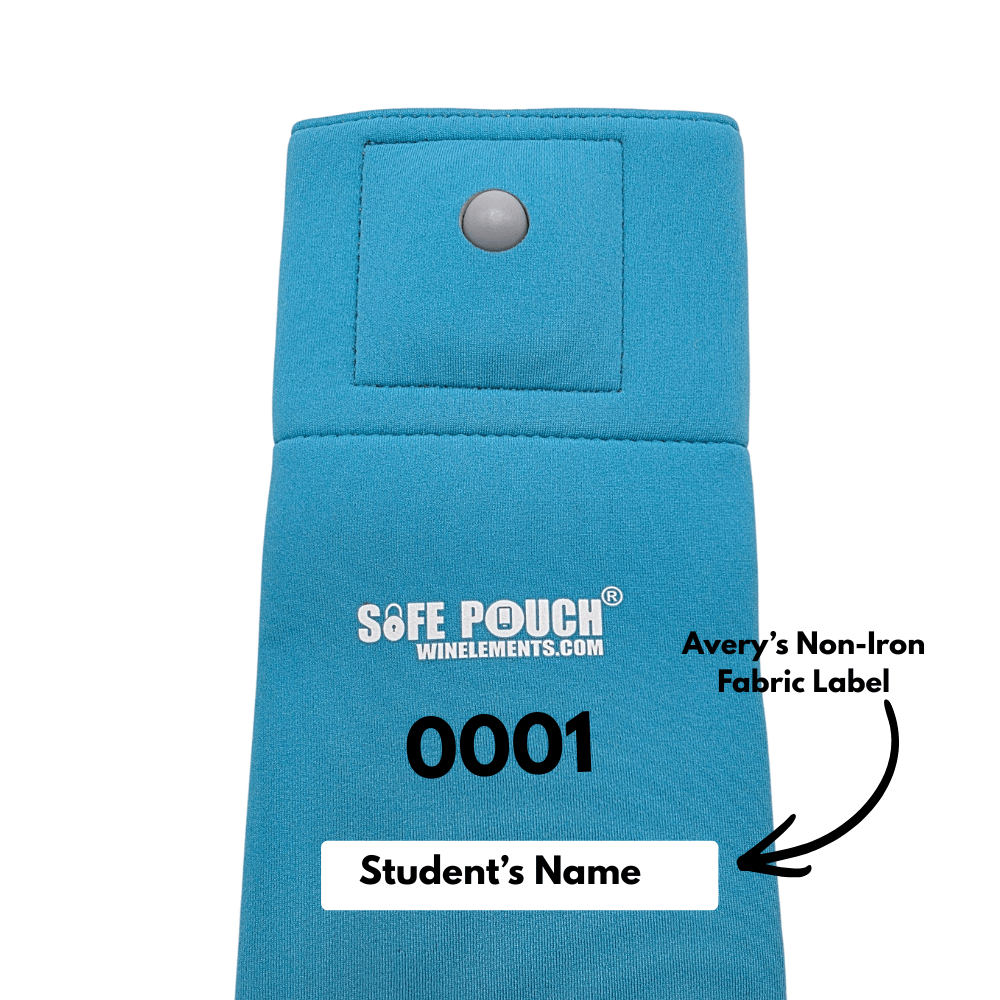
First period: hand out pouches, write the number by each name. Students lock; teacher verifies through the access holes. Optional: Avery no-iron fabric label with the student’s name.
Sixth period: ask each student their number and write it down. Check each pouch through the access holes. At the bell, students unlock at the nearest station and take the pouch home.
Every day after
Lock in first period, check in sixth, unlock at the station. Both teachers match number to roster. Sixth period double-checks every pouch before the enclosures open.
Report damage by number the same day. Issue a spare and send the pouch back. Repairs are free for three years, no paperwork.
Forgot the pouch? Phone goes in the Tier 3 Phone Locker for the day. Damaged pouch ladder: 1st after-school pick-up, 2nd guardian pick-up, 3rd guardian pick-up plus conference.
OPTIONAL SOFTWARE
MySafePouch.com
Replaces the paper roster: assign numbers, log damage, document MTSS/PBIS interventions. $1 per student per year; free for 3 years with a qualifying Safe Pouch order.

The forgotten-pouch answer
Tier 3 Phone Locker, included at no additional cost
The biggest concern schools have about 1:1 is students not bringing their pouches. The Tier 3 Phone Locker holds up to 48 phones for students who forget theirs at home.
It works as a proactive deterrent. When students know a forgotten pouch means their phone goes in the locker for the day, they bring the pouch.
48
numbered phone slots
$0
with your Safe Pouch rollout
1 rule
forgot the pouch, phone goes in the locker
Stations do the unlocking
Magnet Enclosures are mounted at unlock points and locked overnight. Supervisors carry Mobile Magnet Unlockers, and any teacher can verify a pouch through the access holes all day.
Planning a switch at your school?
Send me your bell schedule and classroom count and I’ll adjust these steps to fit. Public agencies can purchase through TIPS Contract #250802 with no competitive bid.
Email me about your rolloutFirst-period return model
Pouches Stay in School. No Return, No Unlock.
Every student gets a numbered pouch. Lock it in first period. The only place to unlock it is back in that same room, after the last bell. The pouch comes back on its own, and it never leaves the building.
The daily loop

Same room, both times.
Step-by-step: who does what
Before switch day
OFFICE STAFF
Number every pouch. Sharpie, 0001 onward, on the front and inside the flap. The number stays for life.
OFFICE STAFF
Count and kit each first-period class. Deliver to each first-period teacher: a stack matching their roster plus three spares, a labeled bin, and a Magnet Unlocker.
FIRST-PERIOD TEACHER
Print your first-period roster. The only roster in the system. Keep it with the bin.
ADMINISTRATOR
Send the parent letter. English and Spanish: phones unlock only in the first-period room after school.
Switch day
FIRST-PERIOD TEACHER
Assign the pouches. Hand one pouch to each student and write the number next to their name. Students lock; teacher verifies through the access holes.
STUDENT
Carry the pouch all day. Any teacher may verify through the access holes.
STUDENT, THEN FIRST-PERIOD TEACHER
Return after the last bell. Student walks back to the first-period room. Teacher unlocks, student keeps the phone, pouch goes in the bin. Teacher counts the bin against the roster.
Every day after
FIRST-PERIOD TEACHER
Morning. Hand out from the bin, students lock, verify, check number. About two minutes.
FIRST-PERIOD TEACHER
Afternoon. Unlock, pouch in the bin, count against the roster.
FIRST-PERIOD TEACHER
Report damage or a missing pouch. Email the pouch number to the administrator the same day. Issue a spare from the bin.
ADMINISTRATOR
Follow up by number. Roster tells you the student. Damaged pouch to the return box; repairs free for three years. Apply the ladder: 1st after-school pick-up, 2nd guardian pick-up, 3rd guardian pick-up plus conference.
OFFICE
Backstop. Early dismissals, late arrivals, and absent teachers. Substitute receives the Magnet Unlocker in the sub folder.
Why it holds
A student who skips the return goes home with a locked phone. Nobody has to chase the pouch. The rule enforces itself.
Ask about this modelRoom-Numbered Consequence Set: one school day
For schools that pouch a phone only when a student breaks the rule. Students who follow the policy are never pouched. Five room-numbered pouches per classroom, one release Magnet Unlocker in the Main Office, and the pouch itself carries the consequence for the rest of the day. This model runs on MySafePouch.com to log each incident and track interventions; without it, the room sets and the consequence ladder have no record behind them.
Why this model works: the consequence is immediate, visible, and portable. The teacher never leaves the room, never argues over a phone, and never writes a referral on the spot. The student carries the evidence to the office at dismissal, and the pouch number ties the incident to a name without any paperwork during class.
| SetupBefore launch | Office staffFive room-numbered pouches per teacherEach teacher receives five Safe Pouch® units labeled by room, for example Room 214-1 to 214-5, and each pouch is registered in MySafePouch.com. The pouch locks on closing, so no tool is needed in the classroom. Only the Main Office holds the release Magnet Unlocker. |
| MorningStart of first period | EveryoneNo pouches in playStudents keep their phones off and away by default. The five pouches sit on the teacher’s desk, unlocked and empty. |
| During the dayClasses in session | The triggerTeacherCaught with a phone out → pouched on the spotThe teacher hands the student the next pouch in the set, the student places the phone inside, and the pouch is closed. It locks itself. The teacher logs the pouch number and the student’s name in MySafePouch.com, about ten seconds on a phone or laptop. The student carries the locked pouch for the rest of the day. No office trip, no standoff, no lost instructional time. |
| Last periodPouch check | StudentLocked pouch stays with the studentAny pouched student still carries the locked pouch: visible, accounted for, unusable. Every pouch also has a built-in emergency safety access anyone can use if a genuine emergency arises. |
| DismissalBell rings | Student, then office staffPouched student reports to the Main OfficeThe student brings the locked pouch to the office. First offense: office staff unlock with the release Magnet Unlocker and return the phone. Repeat offenders: the phone is held for parent pick-up. |
| After dismissalEnd of day | Office staffPouch back in the set, incident on recordMySafePouch.com already shows the pouch number, the student, and the count of prior incidents. The office closes the incident and returns the pouch to its room set for the next morning. That record is data your MTSS/PBIS team can use. |
| RequiredMySafePouch.com | Runs the modelTeachers, office, adminLog incidents, track interventions, see repeat offendersEvery pouched phone becomes one record: pouch number, student, teacher, date. The ladder step is automatic, because the system shows whether this is a first, second, or third offense before the office unlocks anything. Room-set inventory stays current, and the MTSS/PBIS team gets intervention documentation without a spreadsheet. $1 per student per year; free for three years with a qualifying Safe Pouch order. |
| AccountabilityConsequences | LadderAdministratorLadder + pouch accountability1st: pouched for the day, phone returned at the office. 2nd: guardian pick-up. 3rd: guardian pick-up plus parent conference. MySafePouch.com tells the office which step applies. Damaged or lost pouch: the phone is held until the replacement is paid, keeping the room set intact. Repairs for normal wear are covered by the three-year warranty. |
